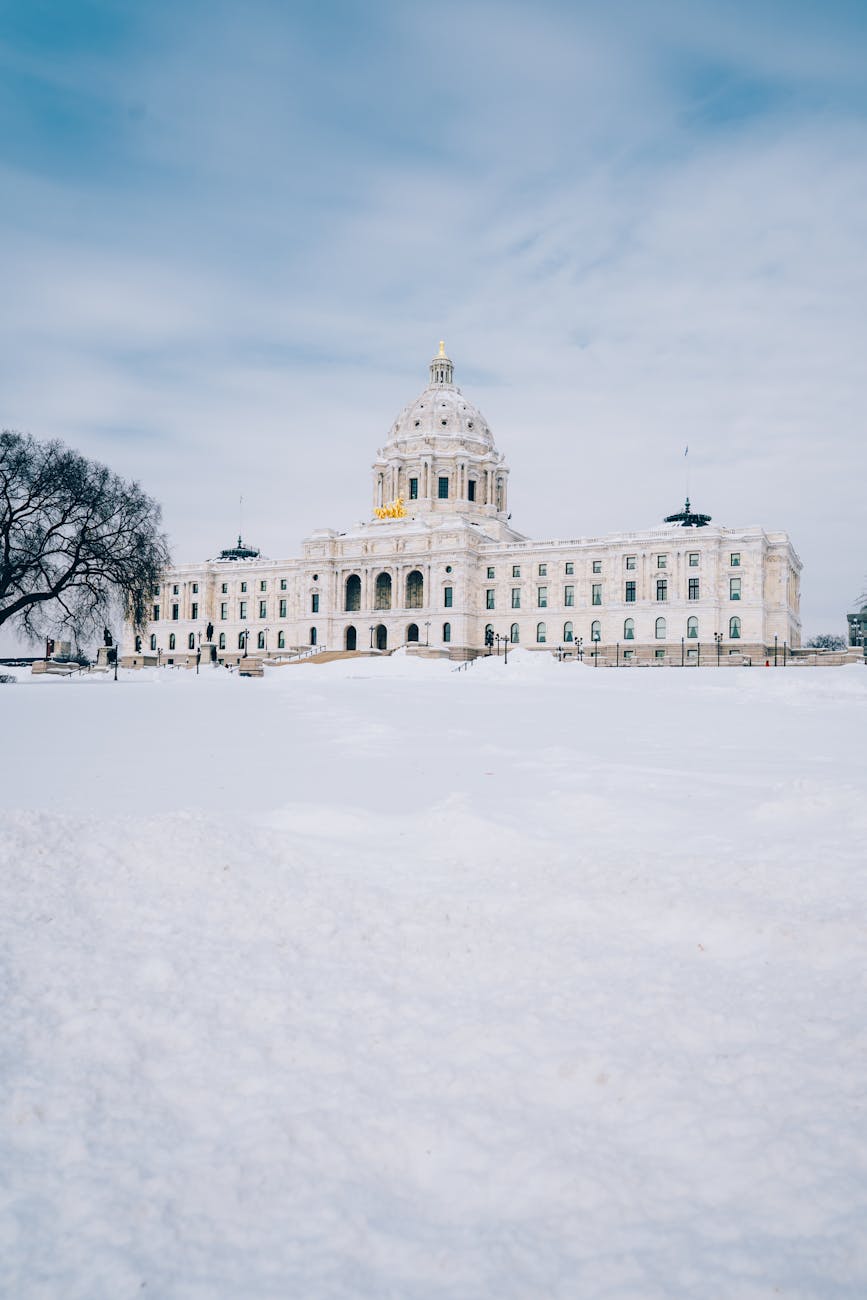
The Minnesota Supreme Court has issued a unanimous 6-0 ruling, determining that a quorum in the Minnesota House of Representatives requires 68 legislators—a decision that effectively nullifies all legislative actions taken by House Republicans since the start of the session on January 14.
As a key stakeholder in Minnesota’s agricultural and irrigation policies, Central Minnesota Irrigators is closely monitoring how this political standoff will impact legislation affecting water management, conservation funding, and rural infrastructure. This information comes from a legislative update from the Irrigators Association of Minnesota and their lobbyists, and their article can be read here.
Background: A Session Stuck in Stalemate
On January 14, the Minnesota House of Representatives convened, but all 66 House Democrats were absent, leaving 67 Republicans present in the chamber. Secretary of State Steve Simon presided over the session and ruled that the House lacked a quorum, stating that 68 members were required.
House Republicans, disagreeing with this interpretation, proceeded with House business—electing Rep. Lisa Demuth (R-Cold Spring) as Speaker, establishing committees, and introducing legislation.
For over a week, House Republicans held daily floor sessions, but Democrats refused to attend. The legal battle over the quorum requirement escalated to the Minnesota Supreme Court, where oral arguments were heard on January 23.
The Supreme Court’s Ruling
The court sided with the Democratic position, ruling that:
✅ A quorum requires 68 legislators, not 67.
❌ All House Republican-led actions since January 14 are invalid, including Speaker Demuth’s election, committee assignments, and bill introductions.
⚖️ The ruling favors the Democrats’ negotiating position but does not resolve the stalemate at the Capitol.
⏳ Until at least one Democrat appears in the chamber, legislative business cannot proceed.
What Happens Next?
Secretary of State Steve Simon has been presiding over House sessions, but without Democrats present, he has not declared a quorum. This means that no official business can be conducted until a power-sharing agreement is reached or until the March 3 special election fills the vacant District 40B seat.
If the Democratic candidate wins the 40B special election, the House would be split 67-67, potentially shifting legislative dynamics. However, until at least 68 members are present, the House remains in a deadlock.
Impacts on Central Minnesota Agriculture & Irrigation Policy
With House business stalled, key agricultural and irrigation-related policies may be delayed, including:
🚜 Agricultural funding and conservation programs that require legislative approval.
💧 Irrigation policy discussions that impact water management in Central Minnesota.
🏛️ Infrastructure and rural development initiatives that depend on House committee action.
The Central Minnesota Irrigators will continue tracking this situation closely and will provide updates as developments unfold.
📢 Stay informed! Follow us for the latest legislative updates and insights on how these decisions impact Minnesota’s irrigation community.
 Central Minnesota Irrigators