
If you’re a farmer relying on irrigation in Minnesota, take note—important updates have been made to the Groundwater Protection Rule and its associated map. These updates are critical for planning your nitrogen fertilizer applications and ensuring compliance with state regulations.
What’s Changed?
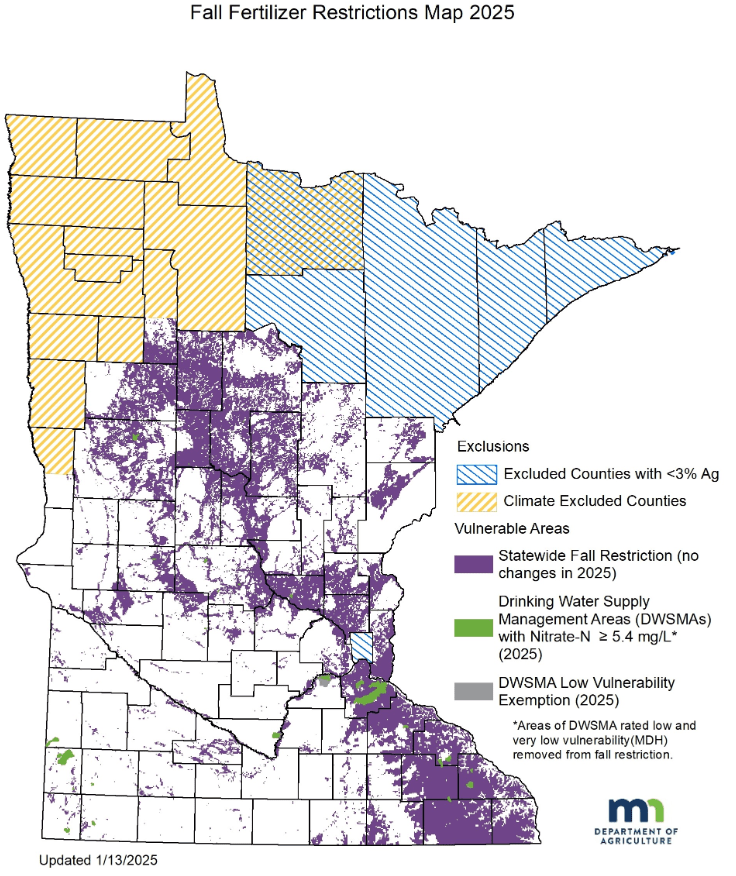
The Minnesota Department of Agriculture (MDA) has updated the Fall Nitrogen Fertilizer Application Restrictions Map, which helps farmers identify areas where fall nitrogen applications are restricted to protect groundwater from nitrate contamination.
- Ellsworth DWSMA Removed: The Ellsworth municipal Drinking Water Supply Management Area (DWSMA) is no longer on the map due to a change in the community’s water source.
- New Additions: While no new municipal DWSMAs were found to have elevated nitrate levels, two non-municipal wells in Scott County (Brookhaven Development and Mobile Manor) have been identified with elevated nitrate levels. These areas will now fall under Mitigation Level 2.
Under Mitigation Level 2, a local advisory group will work with farmers in these areas to recommend practices that reduce nitrate contamination in groundwater. The restrictions on fall nitrogen fertilizer applications for these newly affected areas will begin September 1, 2025.
Why It Matters
The Groundwater Protection Rule is designed to protect drinking water by limiting nitrate contamination, especially in vulnerable areas. For farmers, understanding these restrictions is essential for compliance and for maintaining sustainable farming practices.
Check the Map and Plan Ahead
Before the fall 2025 planting season, review the updated map to see if your fields fall within these restricted zones. Early planning can help you adapt your fertilizer application strategies without disrupting your operations.
You can view the map by clicking the link: New Fall Fertilizer Restrictions Map 2025.
Find More Information
Visit the MDA website for more information on the Groundwater Protection Rule.
Protecting our groundwater is a shared responsibility. By staying informed and proactive, Minnesota farmers can continue to lead the way in sustainable agriculture while safeguarding this vital resource for future generations.
 Central Minnesota Irrigators