The Central Minnesota Irrigators have awarded educational grants to support initiatives related to conservation, sustainability, precision agriculture, and water resources. The two grant recipients, Hancock Public Schools and Sacred Heart Area School, will each receive up to $750 for their educational projects.
Hancock Public Schools plans to use the grant to purchase “Farmbeats for Students” kits for their Ag Technology course. These kits will provide students with a hands-on and immersive learning experience in utilizing advanced technologies like artificial intelligence (AI) and machine learning in agriculture. The kits include both software and hardware components.
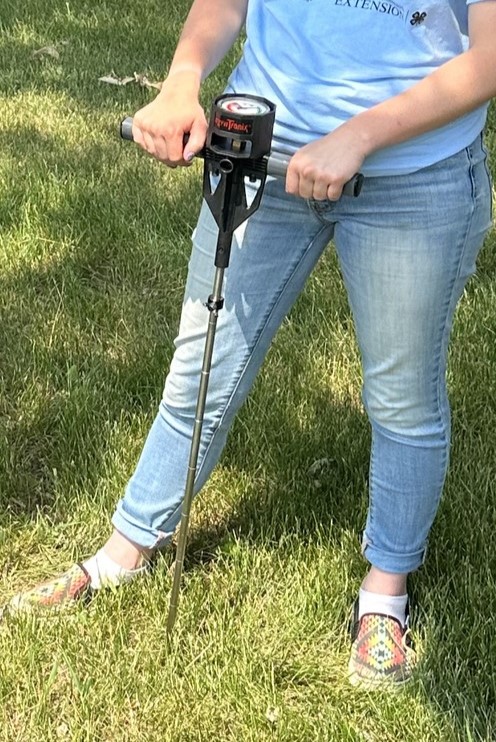
Students will have the opportunity to work with sensors that measure parameters such as soil moisture, light levels, and more. They will use these sensors to monitor various resources and the status of crops. This real-time data will be collected and analyzed by students, simulating the decision-making process of a farmer. By analyzing this data, students can make more informed decisions related to agriculture and resource management.
This educational project not only offers students practical skills in modern agriculture but also encourages them to explore innovative technologies that can contribute to sustainable and efficient farming practices. It’s a valuable initiative that aligns with the grant’s focus on water resource conservation and agriculture sustainability. Hancock Public Schools’ will give a presentation of their project at the Central Minnesota Irrigators’ annual meeting in January 2024.
Sacred Heart Area Schools will be using the funding to purchase an AeroGarden Farm 24XL. With these, student’s will choose plants to grow and then compare growth and yield to traditional planting. They will work on math skills such as measuring and graphing and will also be able to take home plants they have grown. Utilizing this, students will have a better understanding of the life cycle of plants and the knowledge of alternative farming methods. The hope is the hydroponic system will educate students that there is more to agriculture than tractors and soil and spark curiosity or a passion to continue to explore and create in the agriculture industry.
The educational project at Sacred Heart Area Schools, involving the purchase of an AeroGarden Farm 24XL, offers a fantastic opportunity for students to engage in experiential learning and gain a deeper understanding of plant growth, alternative farming methods, and the broader world of agriculture.
By allowing students to choose plants and cultivate them within the AeroGarden Farm 24XL, the project encourages active participation and exploration. Comparing the growth and yield of hydroponically grown plants to traditional soil-based planting provides a valuable learning experience. Enabling students to take home the plants they’ve grown personalizes the learning experience. It allows them to observe the full life cycle of their plants and nurtures a sense of responsibility and care.
The project introduces students to hydroponics, an alternative farming method that doesn’t rely on traditional soil and can be more resource-efficient. This knowledge broadens their perspective on agriculture, emphasizing that it goes beyond the conventional imagery of tractors and soil. One of the primary goals of the project is to spark curiosity and potentially ignite a passion for the agriculture industry. By exposing students to the diverse facets of agriculture, it encourages them to explore, innovate, and create within this field.

This initiative highlights the transformative power of education to inspire and prepare students for the challenges and opportunities within the agriculture industry. Sacred Heart Area Schools’ project has the potential to nurture future leaders and innovators in agriculture, providing students with a solid foundation for exploring and contributing to the industry in innovative ways.
The Central Minnesota Irrigators of Minnesota’s mission is to educate, inform and promote research irrigation techniques, which is vital for sustainable water resource management in agriculture. It’s great to know that grant opportunities will be available again in the spring of 2024, as this will provide additional support to educational and research initiatives that align with their mission. This continued commitment to funding such projects is essential for advancing agricultural practices and ensuring the responsible use of water resources in the region.
 Central Minnesota Irrigators